
Brick by Virtual Brick: Exploring BuildTheEarth
Unsurprisingly, most of the world knows Minecraft—but what may surprise you is that the reverse is becoming true. The Earth itself is being steadily reconstructed in a single Minecraft world, with every city, coastline, and mountain rebuilt into a unified digital planet.
The project is called BuildTheEarth, an initiative striving to recreate the whole world in Minecraft. BuildTheEarth (BTE) launched in 2020 as a collaborative initiative that invites participants from around the globe to reconstruct the entire Earth—brick by virtual brick—within the Minecraft platform, on a near 1:1 scale. This lofty goal not only showcases the capabilities of a dedicated group of gamers but also serves as a prime case study in digital storytelling, exploring how people's lives can be built in virtual spaces. A point of time captured through their amateur eyes and block palette.
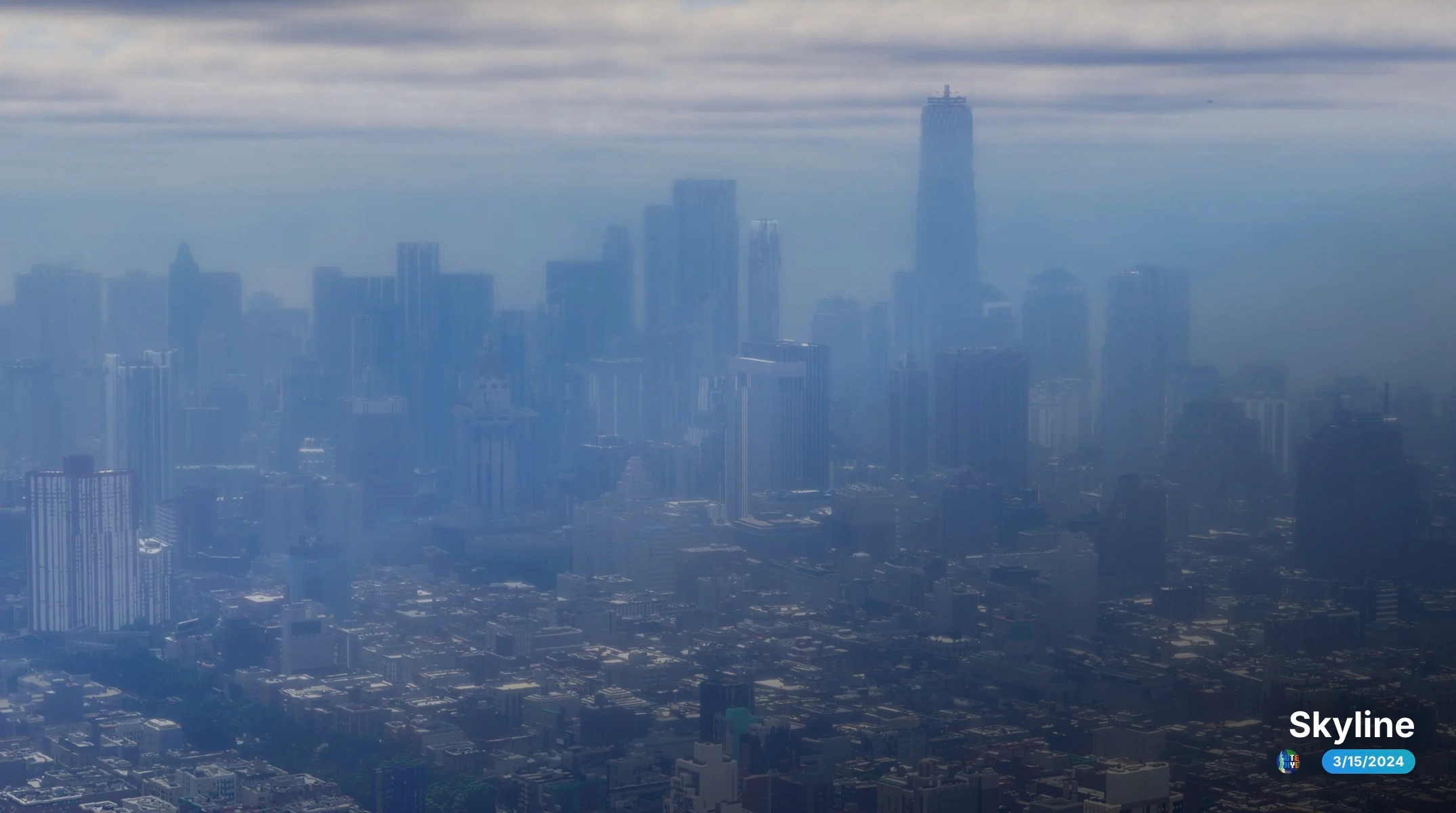 Skyline, New York City. Screenshot from the BuildTheEarth gallery. March, 2024.
Yes, that is Minecraft. At its core, BTE aims to recreate every building, street, and landmark on the planet within their Minecraft server, so even the most minor contribution helps. Experienced participants, often referred to as "Builders," utilize real-world geographical data to inform their constructions, effectively creating a digital twin of our planet that any of Minecraft’s 30 million users can access. But even amongst that large population, experienced builders who’d work for free are rare, so BTE’s site implores amateurs to take part. They explain that, while it might be intimidating, anyone can participate by simply building their house. From there, they might expand their coverage, building their block, then neighbourhood, and so on.
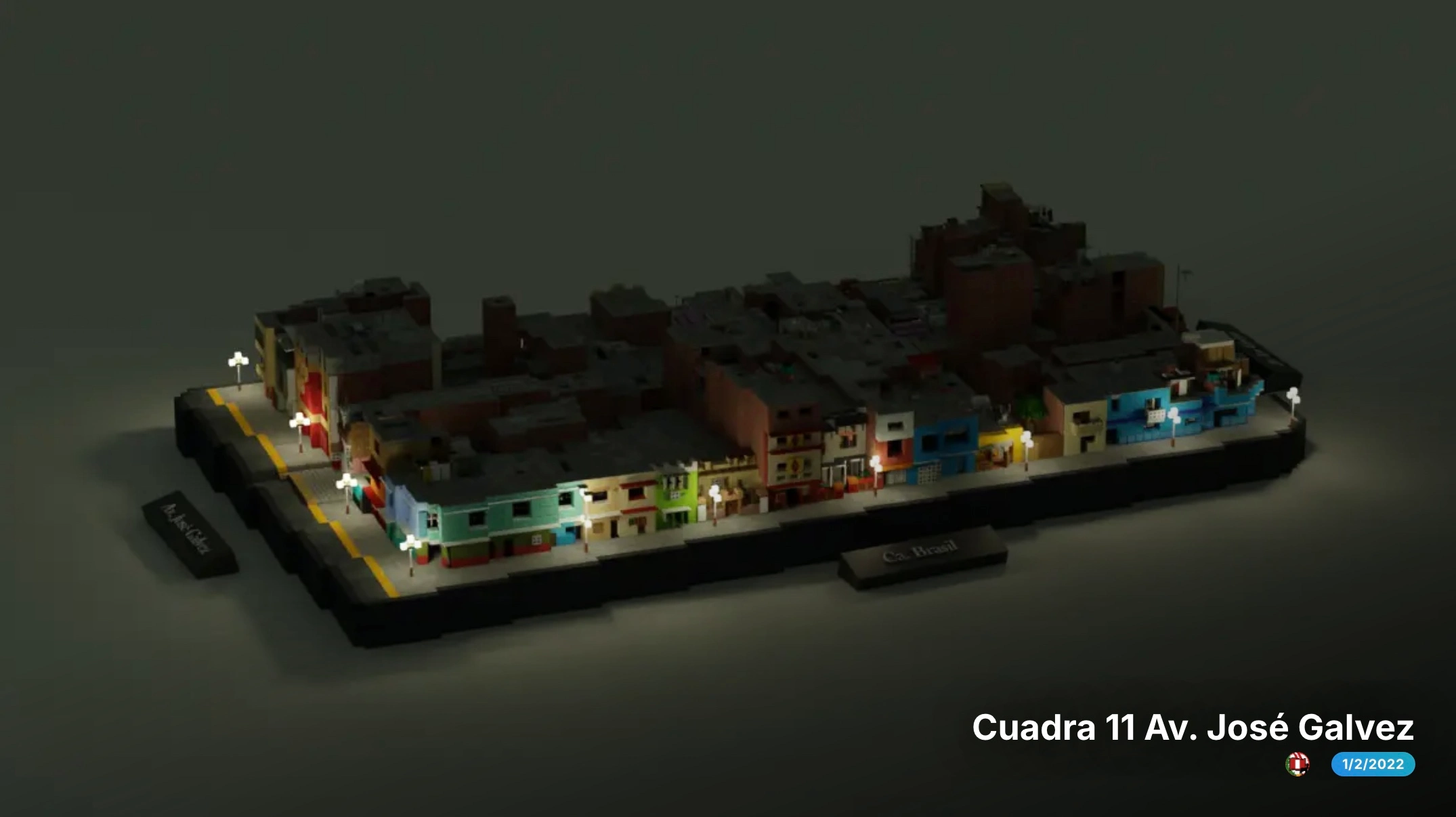
Cuadra 11 Av. José Galvez. Screenshot from the BuildTheEarth gallery. January, 2022.
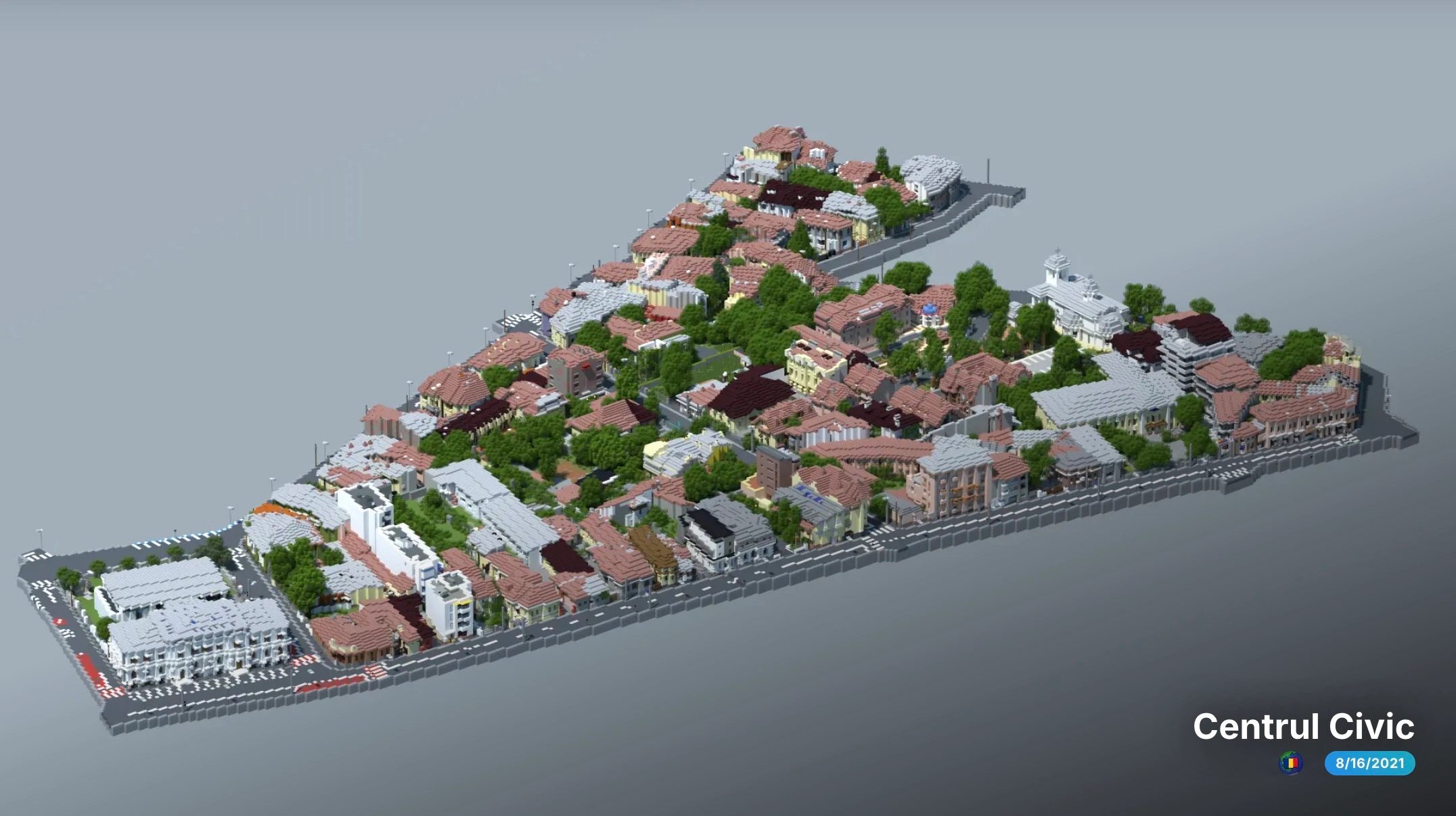
Centrul Civic. Screenshot from the BuildTheEarth gallery. March, 2024.
The scope of BuildTheEarth is staggering. With builders working on individual cities, landmarks, and even entire regions, the initiative brings together a vast array of perspectives and skill sets. Professional builders give credibility to the project through larger-scale builds, and amateurs can improve with smaller tasks before they attempt more extensive creations while preserving the project’s amateur appeal. This collaboration has led to the creation of not just a digital replica of many parts of the Earth but also a living narrative that reflects the complexities of human geography, culture, and architecture. BTE has a similar feel to Google Earth Outreach, which provided non-profit organizations, scientists, and journalists with Google's mapping tools and technology to help them address global issues like environmental conservation, disaster relief, and human health. Sure, a one to one recreation of our homes may be less impactful than what GEO is doing, however, BTE is still a great example of digital storytelling.
Digital storytelling has various forms, allowing individuals to document their experiences, ideas, and histories through interactive media. BuildTheEarth is the epitome of this concept. People's history is recorded by augmenting our present reality into an interactive virtual experience. Each build can be viewed as a story imbued with local history, cultural significance, and personal anecdotes. Google Earth doesn’t know what your nearby alleyway’s unique graffiti and children’s chalk looks like, but you do. Builders can imbue their knowledge of specific locations into their works, narrating the stories behind the structures they recreate.
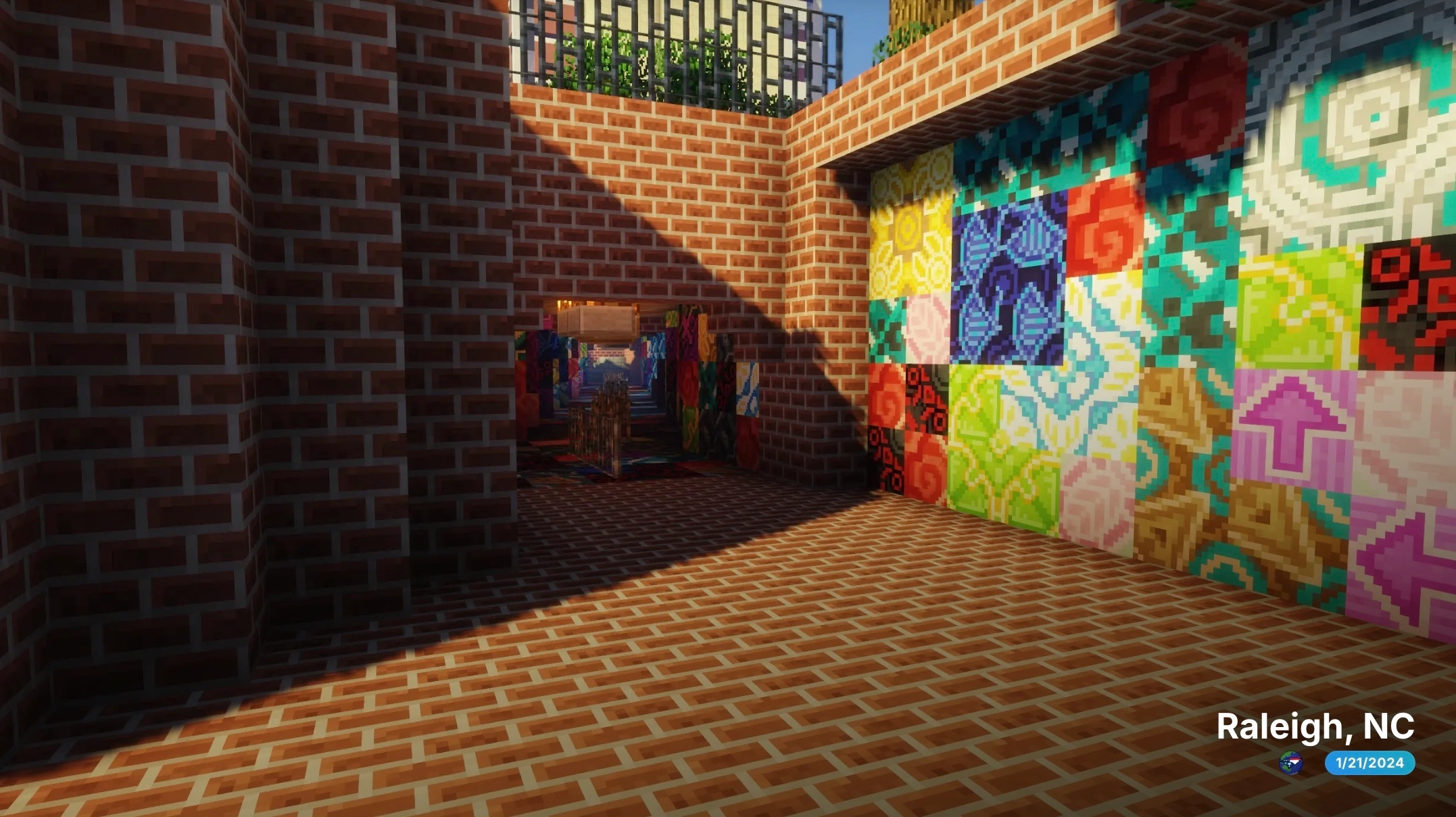
Raleigh, North Carolina. Screenshot from the BuildTheEarth gallery. January, 2024.
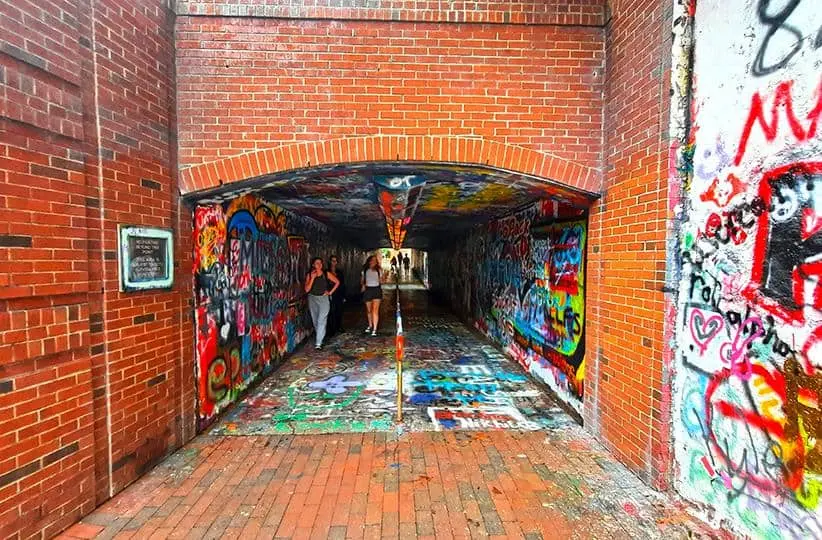
Photograph by Omri Westmark. Explanders. March, 2022.
Granted, when the alleyway is potentially one of the most graffitied places in the world, Google may know about it.
BuildTheEarth actually enforces the use of tools like Google Earth in satellite mode with globe view so that you can see what you’re building from different angles and use the longitude and latitude when laying the foundations to ensure accuracy, thus grounding their digital constructions in reality.
The amateur participatory model makes BTE’s impressive gallery much more awe-inspiring for viewers. According to Digital Storytelling as Public History, “audiences are more likely to connect to digital stories that appear novice-made rather than professionally produced” (Fisanick and Stakeley 3). As builders collaborate on shared projects, they create a mosaic of stories for viewers to enjoy, stories that can span continents and cultures. This interconnected narrative makes BTE not just a construction project but a living, breathing digital archive of our world. An archive with more narrative than others since each block placed represents a decision made by the builder. Overall, BuildTheEarth is a unique storytelling medium where imagination meets empirical data. However, BTE does have some faults.
Firstly, the project may seem more interconnected than it is. The site's first paragraph states that the project “stands as a testament for what we can achieve when we work together as a global humanity.” This narrative is reinforced by the fact that BTE launched during COVID-19, suggesting goals of global unity during a tough time. Yet, build teams are separated by countries, isolating the initiative. Due to this, while the project is still in development, exploring different parts of the virtual world or connecting with other builders is exceptionally tedious, as you’d have to sign up for each build team to be granted access to the server. So, while 30 million Minecraft owners can theoretically access the virtual world, seeing even a single, fragmented country is a timely process.
Secondly, I signed up as a builder myself, and even with my experience, it was a challenge to get started. They did have half-decent tutorials, but I couldn’t begin building until an active builder on the server helped me. For those who are less tech-savvy, BTE isn’t very accessible.
Finally, I fear what may happen when the more dedicated builders lose interest. The average Minecraft player lose interest quickly; "the two week Minecraft phase" is a well discussed phenomena online. Granted, after what I've seen and how much I struggled to get started, I would not consider BTE builders as merely average Minecraft players, however, the volunteer structure is not very condusive to long-lasting play. Even the most dedicated players on servers like Hermitcraft burn out or lose interest, and they are paid. It would seem BTE needs new, skilled, and dedicated builders in order to continue expansion.
Aside from those critiques, BuildTheEarth is a testament to collaborative digital storytelling's power. While the project faces challenges with isolated builders and a complex learning curve, it is a wildly interesting project, and I will likely continue to explore becoming a builder for this project because my neighbourhood isn’t currently represented! Here’s what Creelman Hall (beige perimeter) and Johnston (red perimeter) on the University of Guelph campus. Someone has to represent UoG!
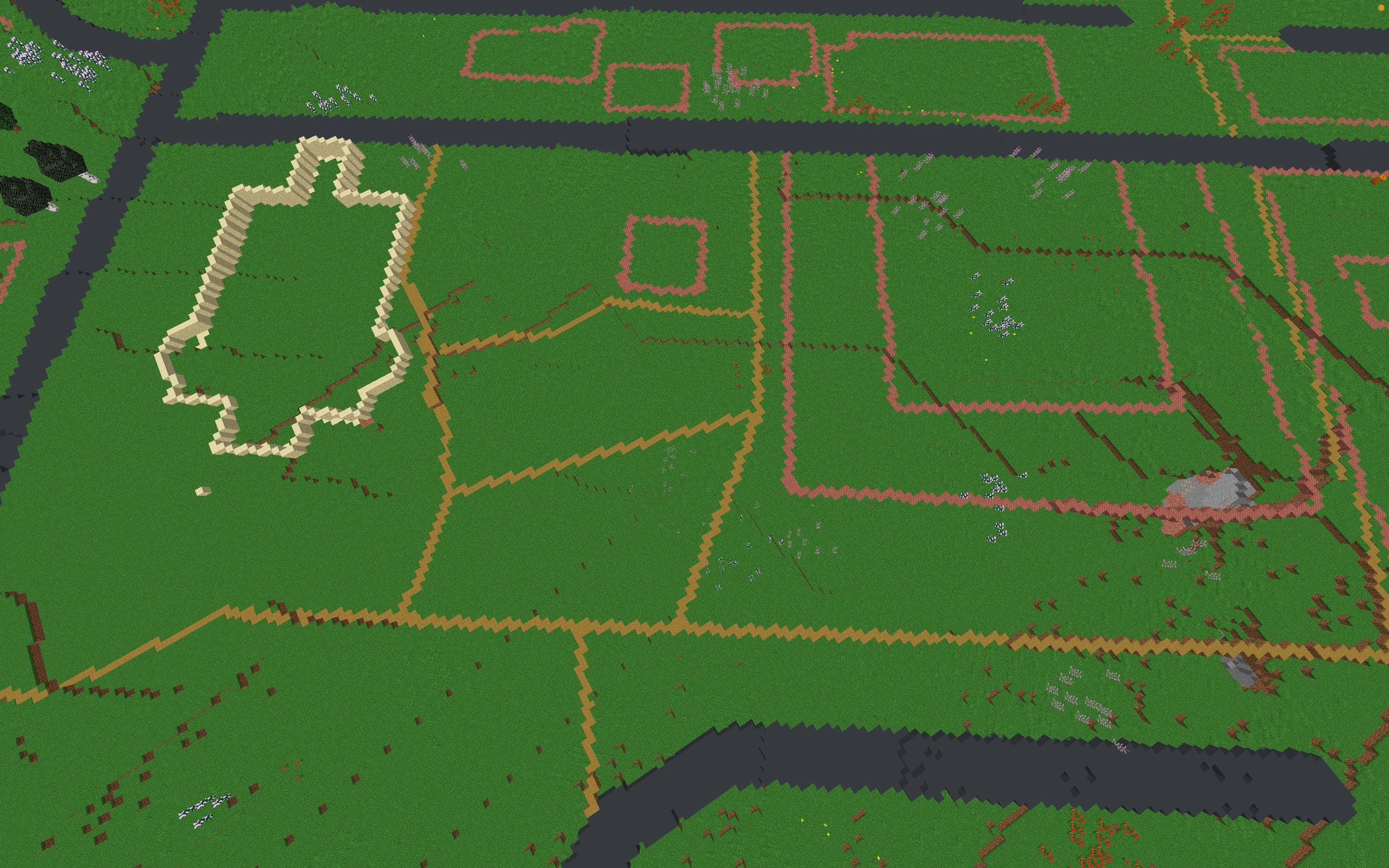
Screenshot from the BuildTheEarth Minecraft server at coordinates 43.53327090387135, -80.22935774014938.
It looks like I have some building to do. Wish me luck, and thank you for reading.
Bibliography: