Lauren Curry is a fourth-year Culture & Technology Studies student at the University of Guelph, with a minor in English.
Her creative work investigates how people use technology to express culture and meaning,
with a growing interest in the ethical dimensions of AI-assisted creativity.
abstract: >
This project examines the use of AI as a creative collaborator in the process of creating a children’s book focusing on the Easter story.
In several rounds of collaboration, the author polished the details of the narrative, the theological precision, the text’s visual age appropriateness,
and produced Jesus’s Easter Story: From Darkness to Light. The reflection on the project speaks to the creative, technical,
and ethical facets of using AI in a religious context, outlining the value of technological aid and signifying the need for human oversight, empathy, and understanding of culture.
citation: "Curry, Lauren. 'Jesus’s Easter Story: From Darkness to Light — A Reflection on AI Collaboration in Religious Storytelling.' CTRL+ALT+DH: A Byte of Creativity, Issue 3, October 15, 2025."
tags:
- AI and Creativity
- digital storytelling
- Children's Literature
- Religious Education
- Ethics of AI
- Human-AI Collaboration
🧩 Key AI Interactions
📖 The AI-Generated Story
1. Initial Prompt
- User Request:
“I want you to help me make an older children's book about Jesus's story and the meaning of Easter. Once we have a solid premise, I want you to create a series of images that can be used to pitch the book.”
- AI Response:
Provided a general outline for a children's book focusing on the significance of Easter. The initial premise was titled “The Greatest Story: Jesus and the Meaning of Easter.”
2. Refinement Prompt (Focusing on Easter)
- User Request:
“Can you focus more on the story of Easter and more specifically what happened?”
- AI Response:
Revised the outline to emphasize the resurrection, with the title changed to “The Greatest Story: The Easter Miracle.”
3. Adding Specific Details
- User Request:
“Can you add who found Jesus’s tomb empty?”
- AI Response:
Added the discovery of the empty tomb by Mary Magdalene and other women.
4. Expansion on Key Events
- User Request:
“Can you explain ‘Hosanna’ in English and other complex theological details?”
- AI Response:
Simplified terms like “Hosanna,” “risen,” and “anoint,” and expanded on Jesus’s teachings about humility and service.
5. Clarifying Theological Elements
- User Request:
“Can you explain why Jesus’s claim to be the Son of God was considered blasphemy?”
- AI Response:
Provided a more comprehensive explanation of the religious and cultural context behind the accusations of blasphemy.
6. Simplifying Language
- User Request:
“Can you simplify the explanations of Jesus’s final words while keeping the meaning clear?”
- AI Response:
Simplified the language to be child-friendly while maintaining theological accuracy.
7. Title Refinement
- User Request:
“Can you come up with a more engaging title for older children?”
- AI Response:
Suggested several options; “Jesus’s Easter Story: From Darkness to Light” was selected.
(Can link to 40 page full dialogue if needed)
🎨 AI Generated Images
Cover Page Image:
User said:
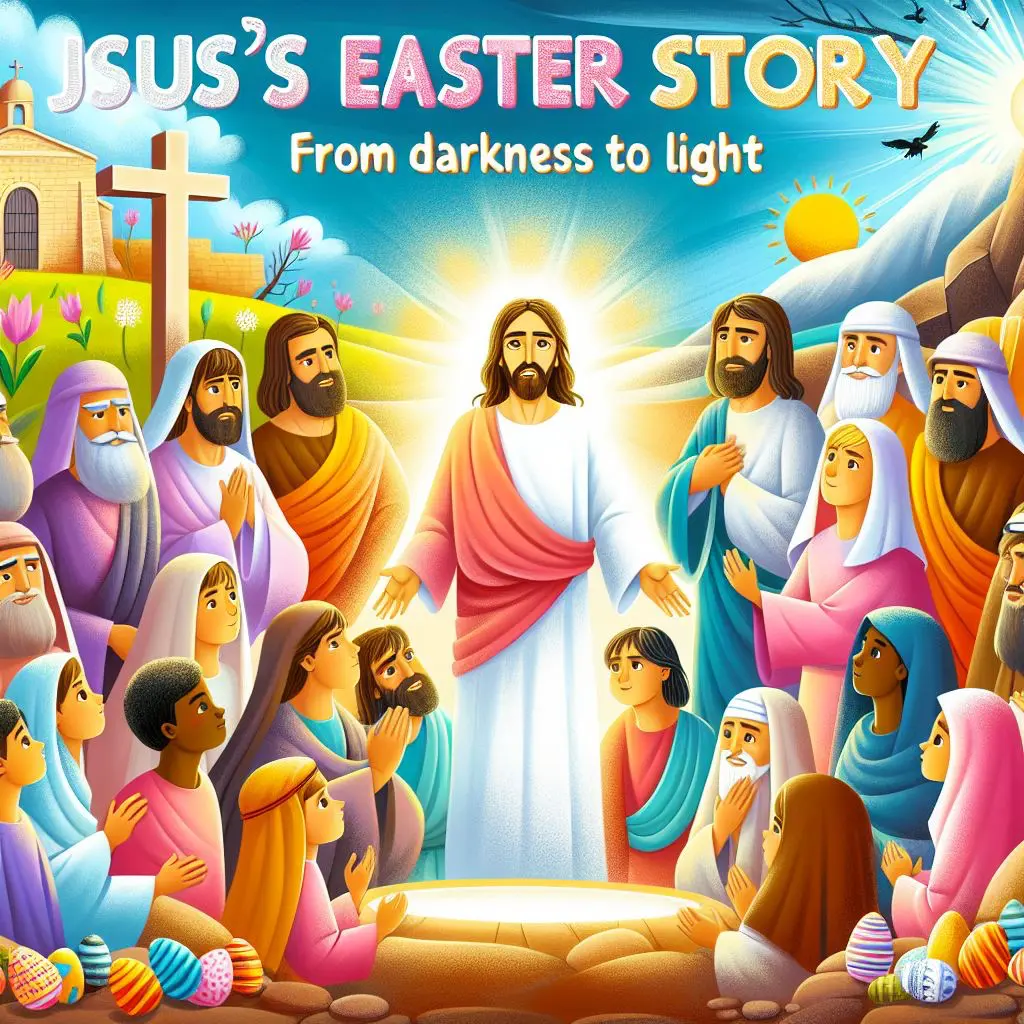
Let's start with creating an image for the front of the book. Create an interesting and inviting image of Jesus and the story of Easter. It shouldn't show any graphic images as it is for children. It should have the title of the story in big bold letters that have a fun font.
Copilot said:
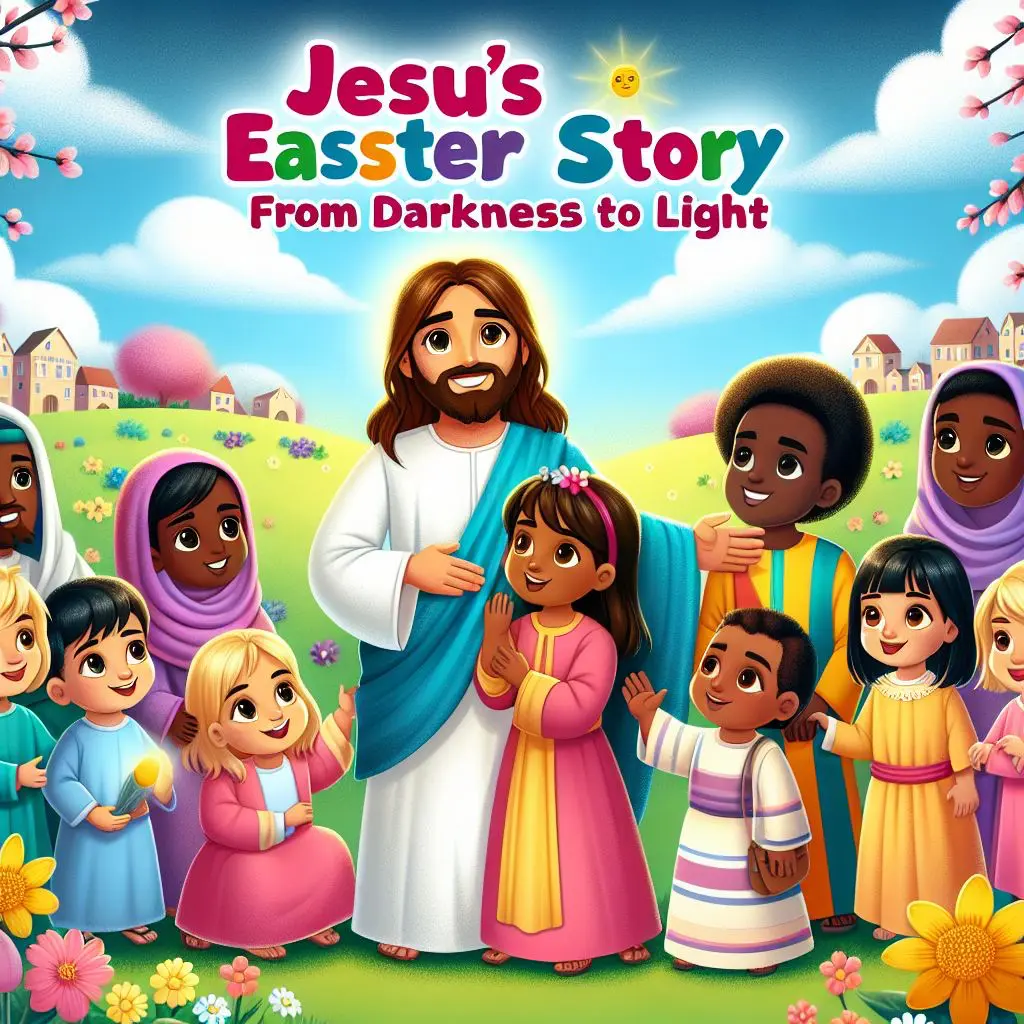
Copilot
User said:
This is ok but make sure the title says "Jesus's Easter Story From Darkness to Light."
Copilot said:
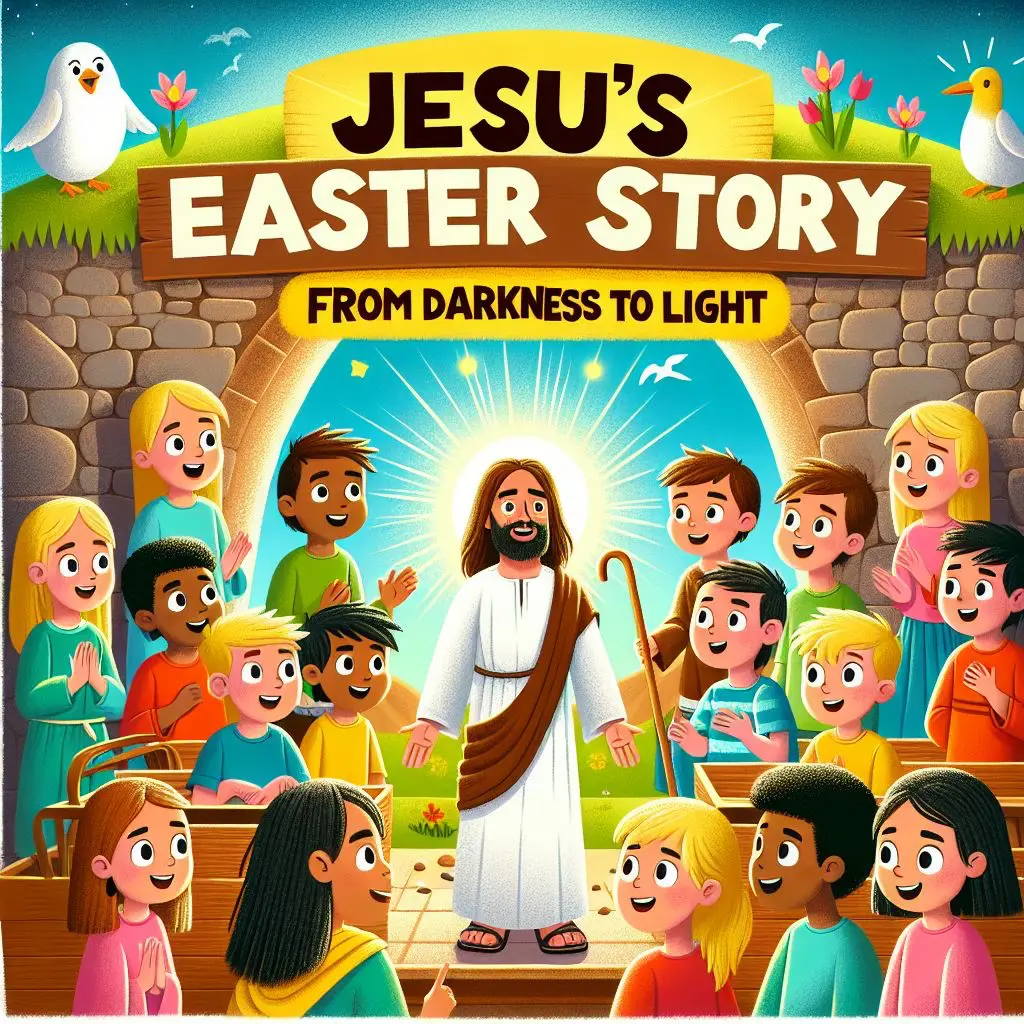
Copilot
User said:
Can you include Jesus's disciples in it?
Copilot said:
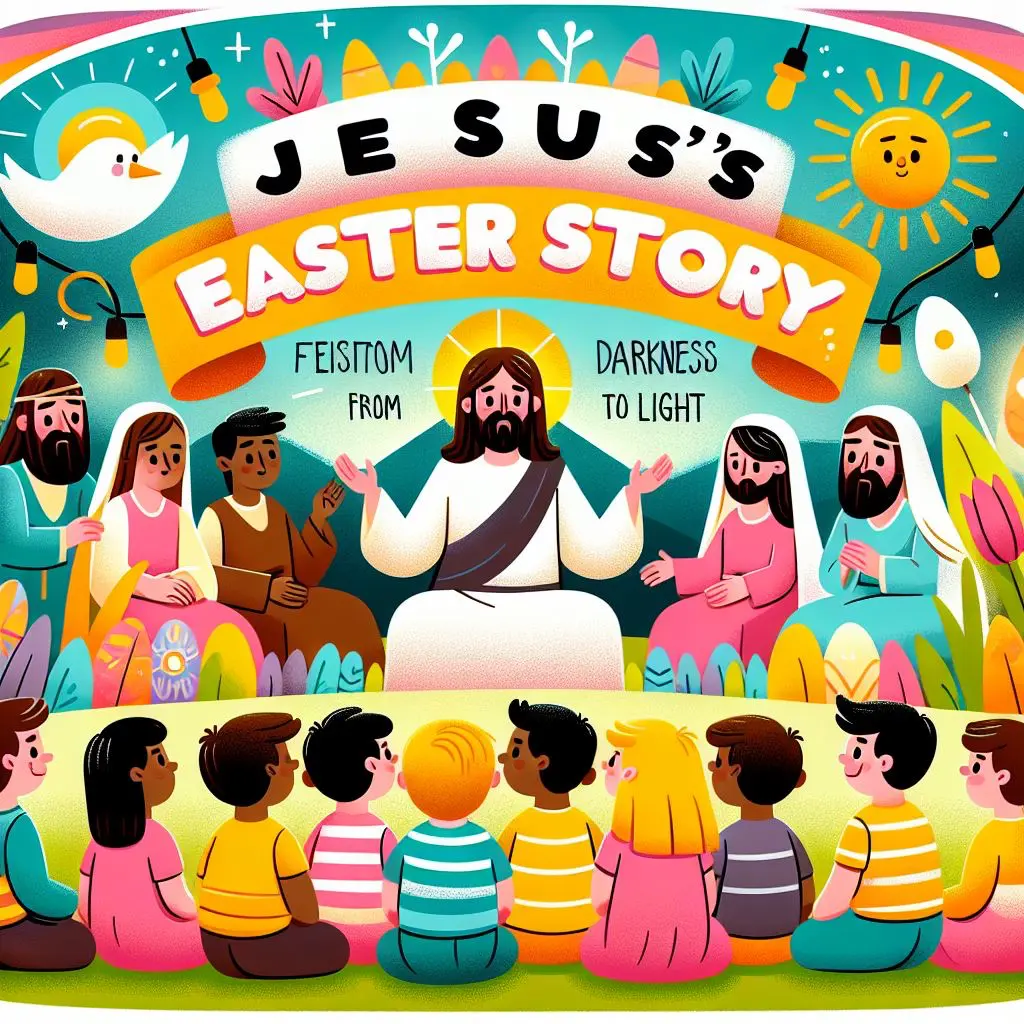
Copilot
User said:
This looks pretty good but a little less busy.
Copilot said:
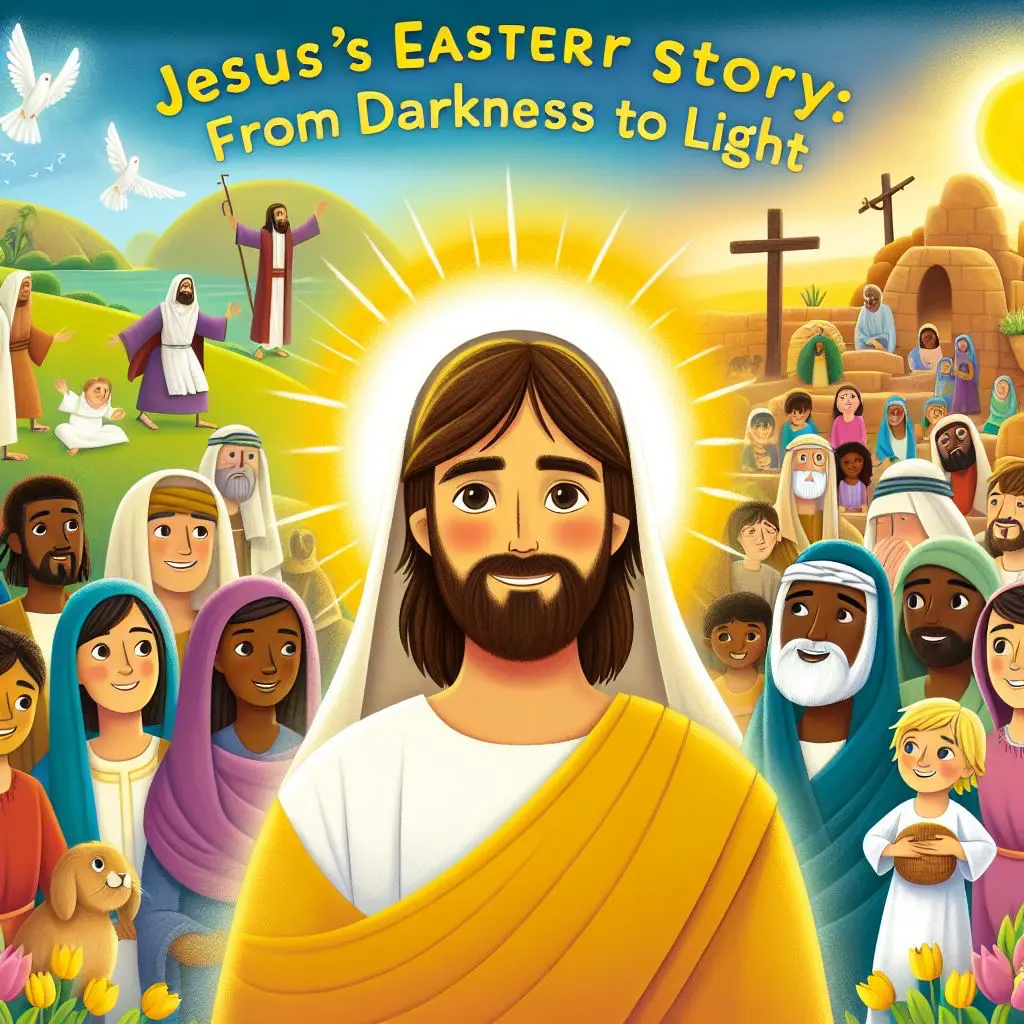
Copilot
User said:
This looks great. Keep this image but make sure the title reads "Jesus's Easter Story From Darkness to Light."
Copilot said:
Copilot
User said:
It is still spelled incorrectly but I guess we will go with it.
Chapter 1 Image:
User said
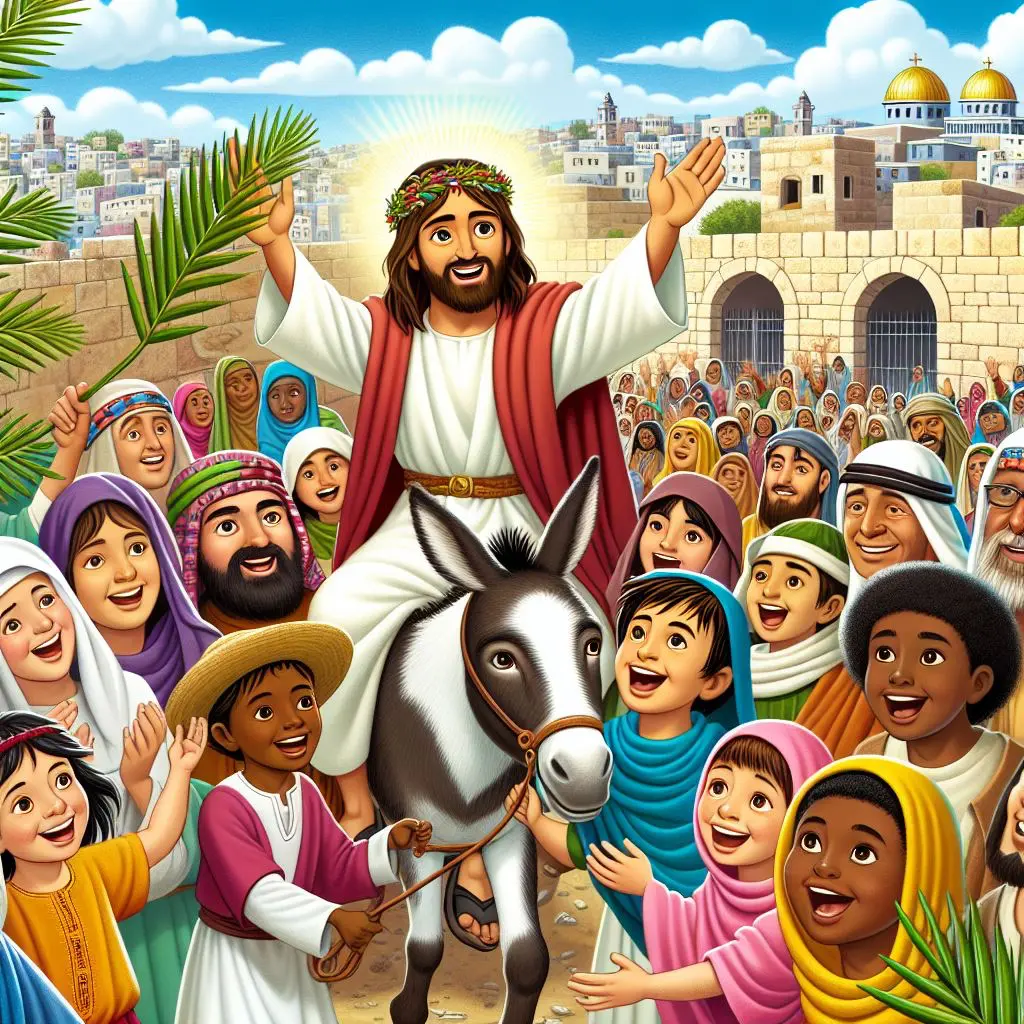
Can you create an image for chapter 1 that is engaging for kids but also relates to the content of the chapter?
Copilot said:
Copilot
User said:
That's great.
Chapter 2 Image:
User said
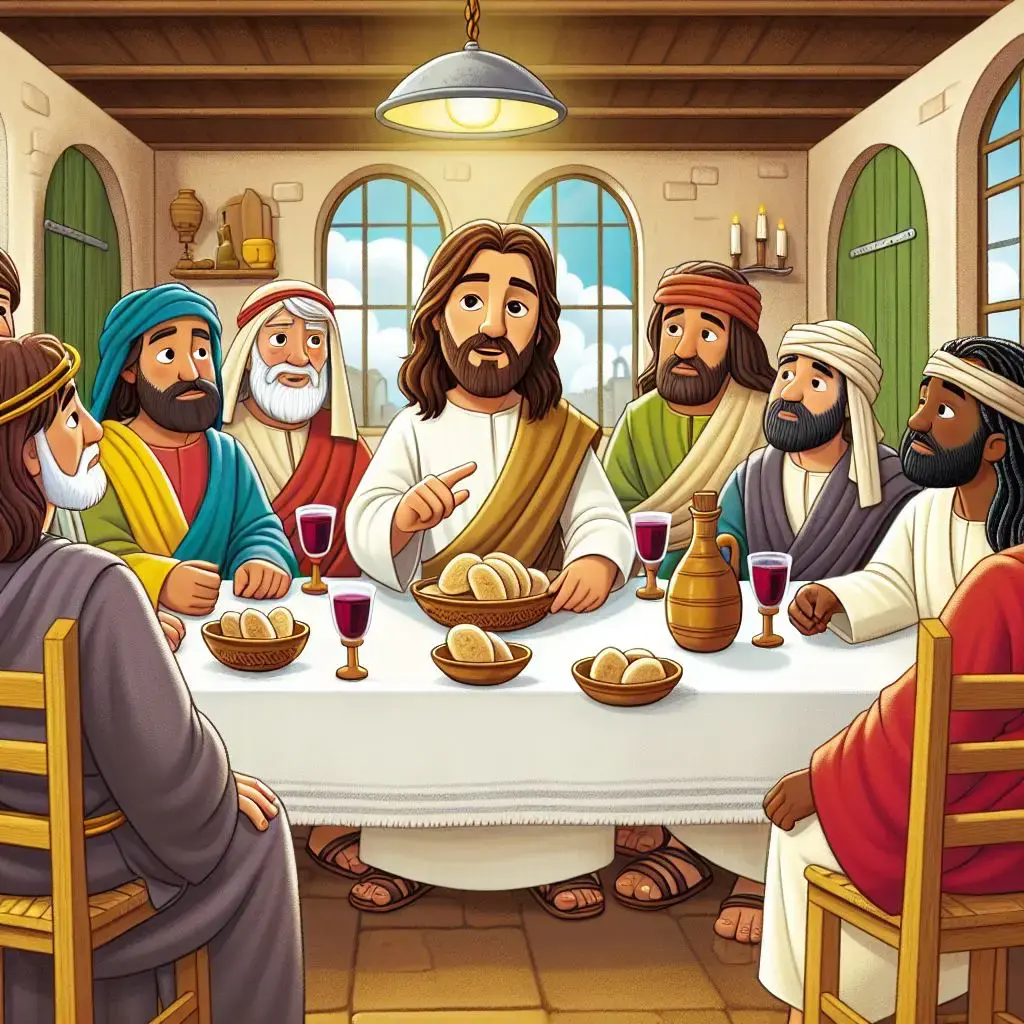
Now create an image for chapter 2 that is engaging for kids but also relates to the content of the chapter.
Copilot said:
Copilot
User said:
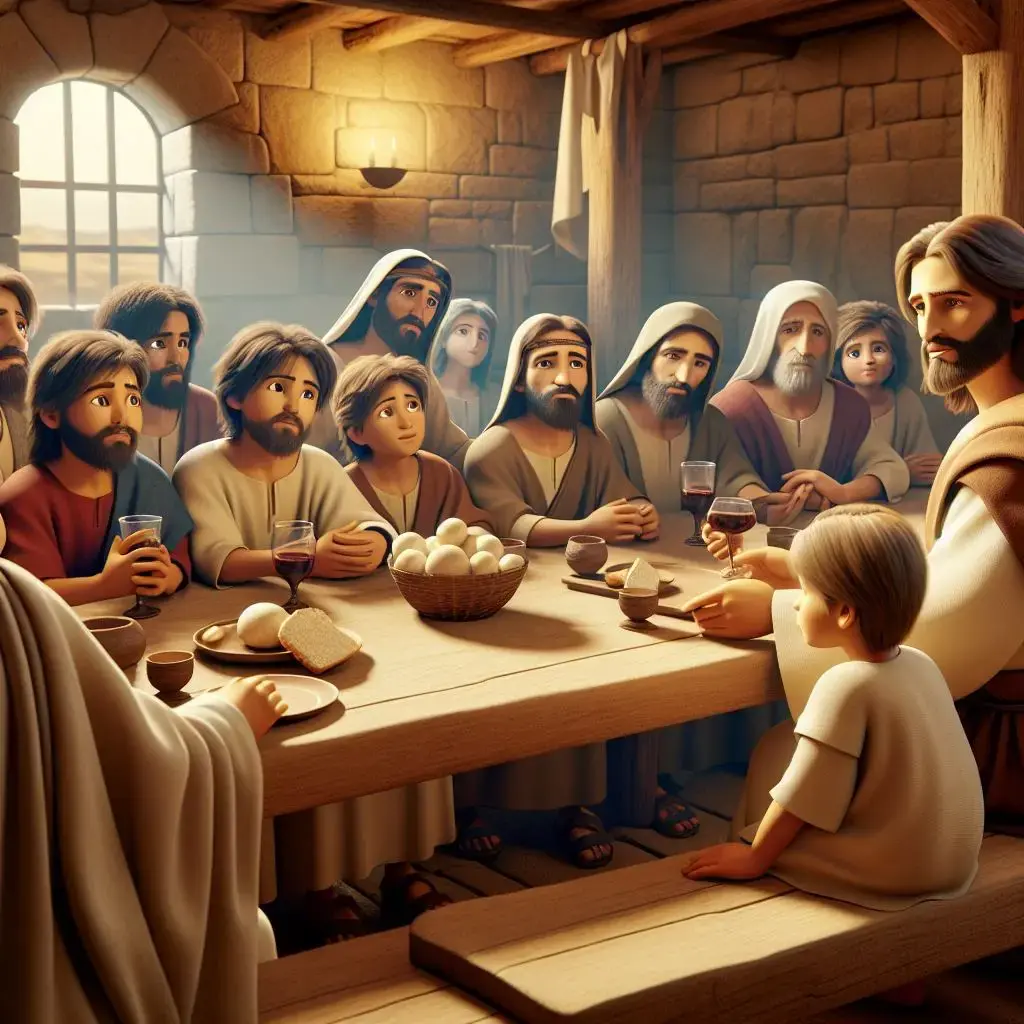
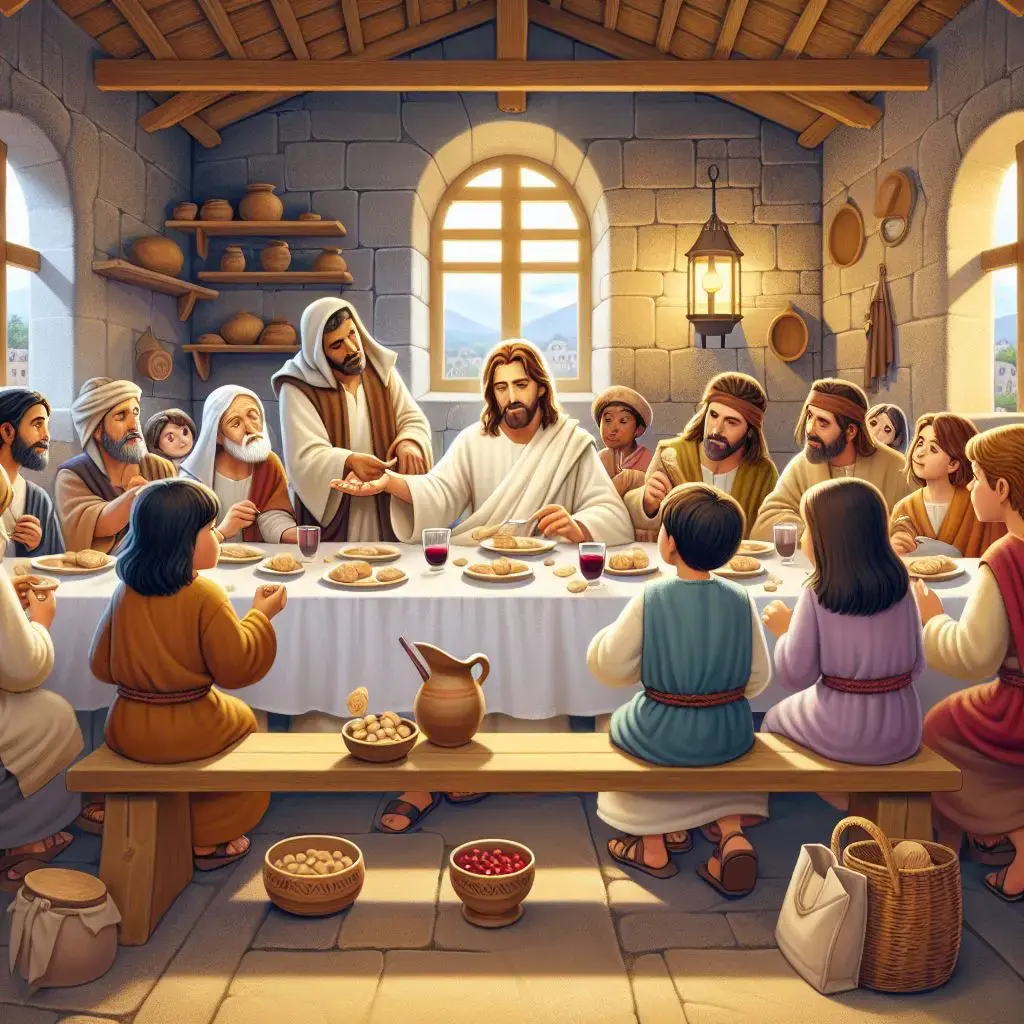
That's ok but they wouldn't have electricity during this time. Can you remove the light fixture at the top of the image?
Copilot said:
Copilot
User said:
Make it more engaging for children.
Copilot said:
Copilot
User said:
Ok these aren't great, I'll just use the first one you generated.
Copilot said:
I understand. I'm glad you found the first one useful! If you need any more help with the book or have any other requests, feel free to let me know. I'm here to assist you!
Chapter 3 Image:
User said:
Create an image for chapter 3 that is engaging for kids but also relates to the content of the chapter.
Copilot said:
Copilot
User said:
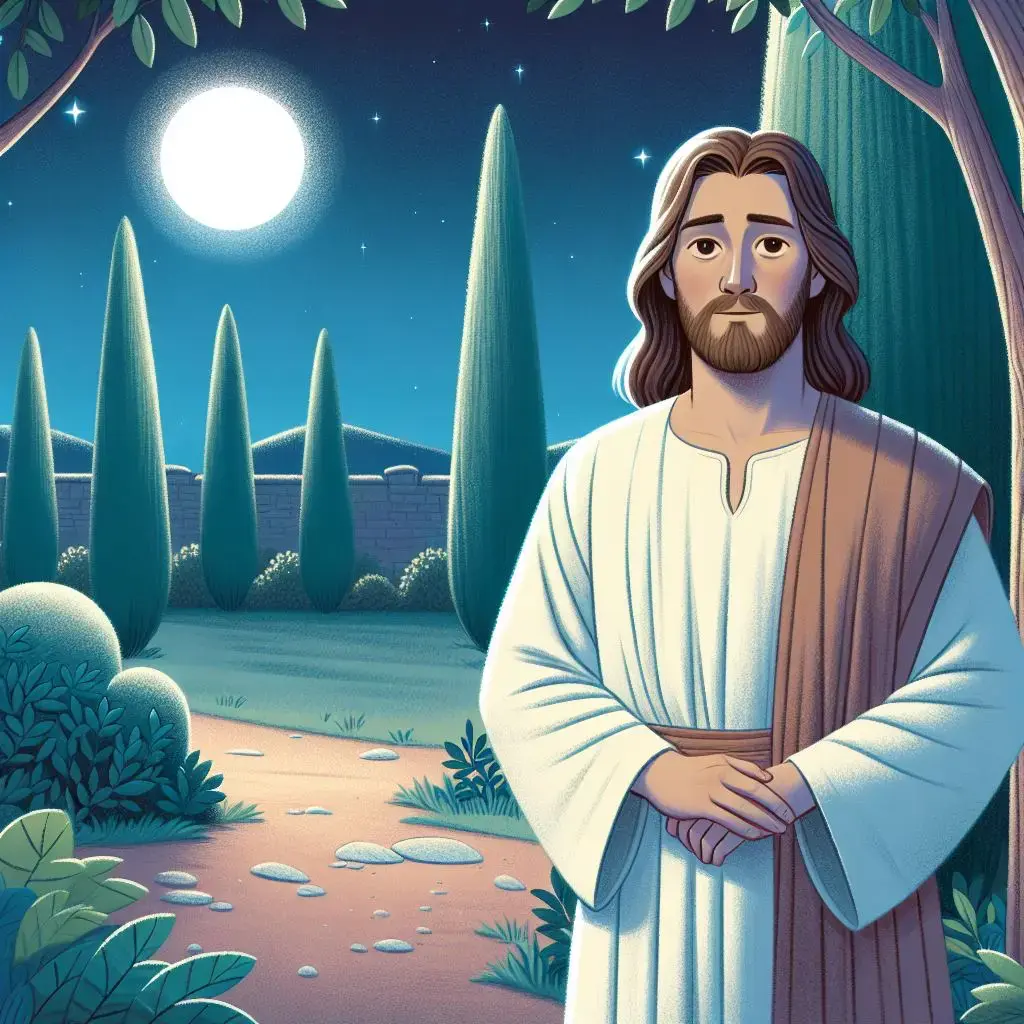
The image should show Jesus alone.
Copilot said:
Copilot
Chapter 4 Image:
User said:
Make an image that depicts chapter 4 and is engaging for children.
Copilot said:
Copilot
User said:
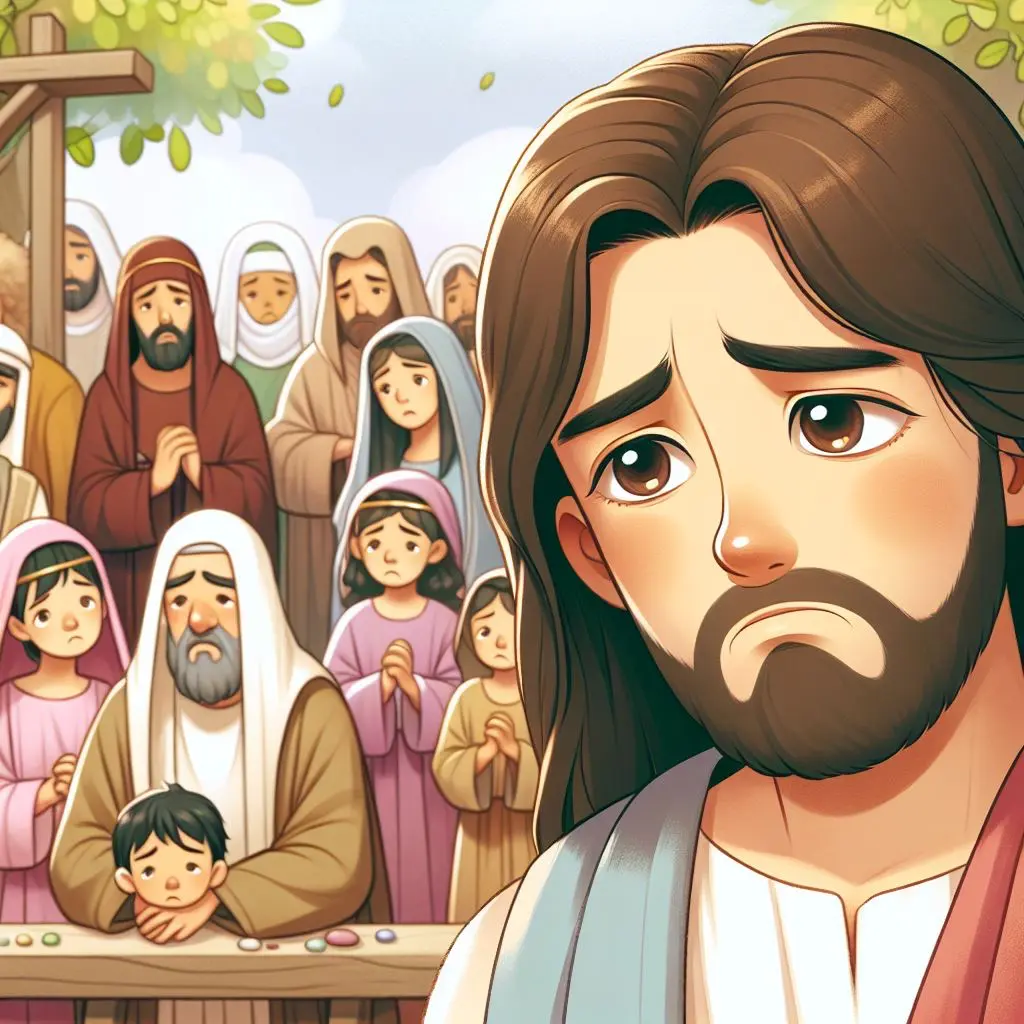
Jesus should look very sad.
Copilot said:
Copilot
User said:
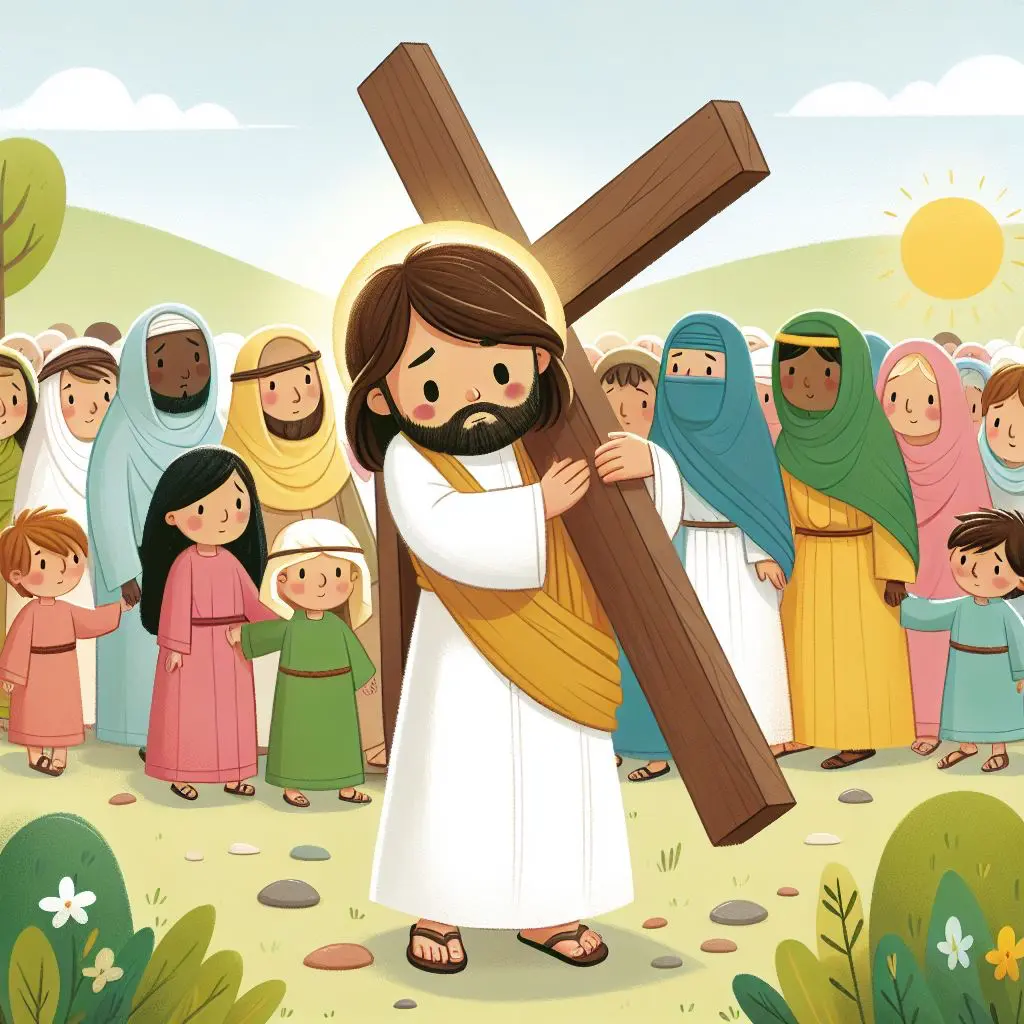
These aren't really representing the chapter. Maybe just create an image that shows Jesus carrying his own cross on his back that is appropriate for children.
Copilot said:
Copilot
Chapter 5 Image:
User said:
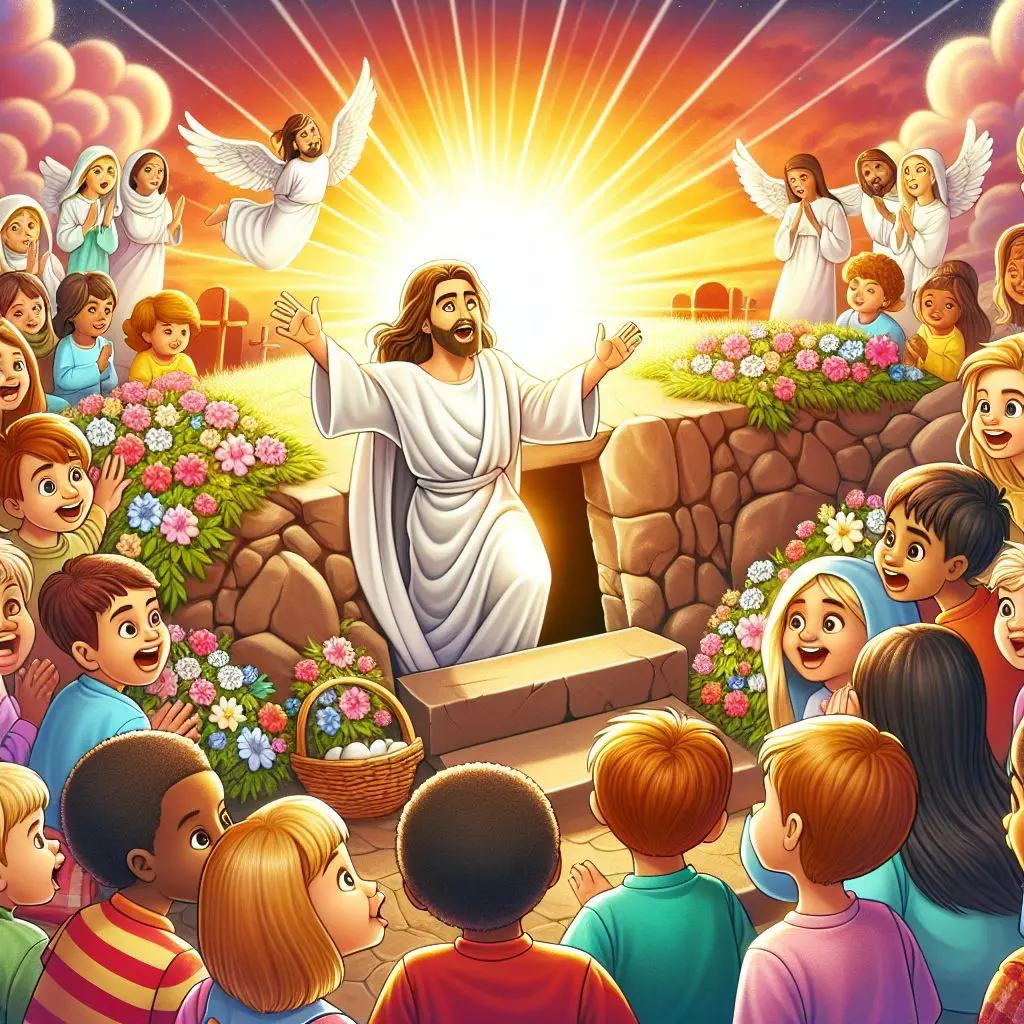
Create an image for chapter 5 that shows the premise of the chapter and is engaging for children.
Copilot said:
Copilot
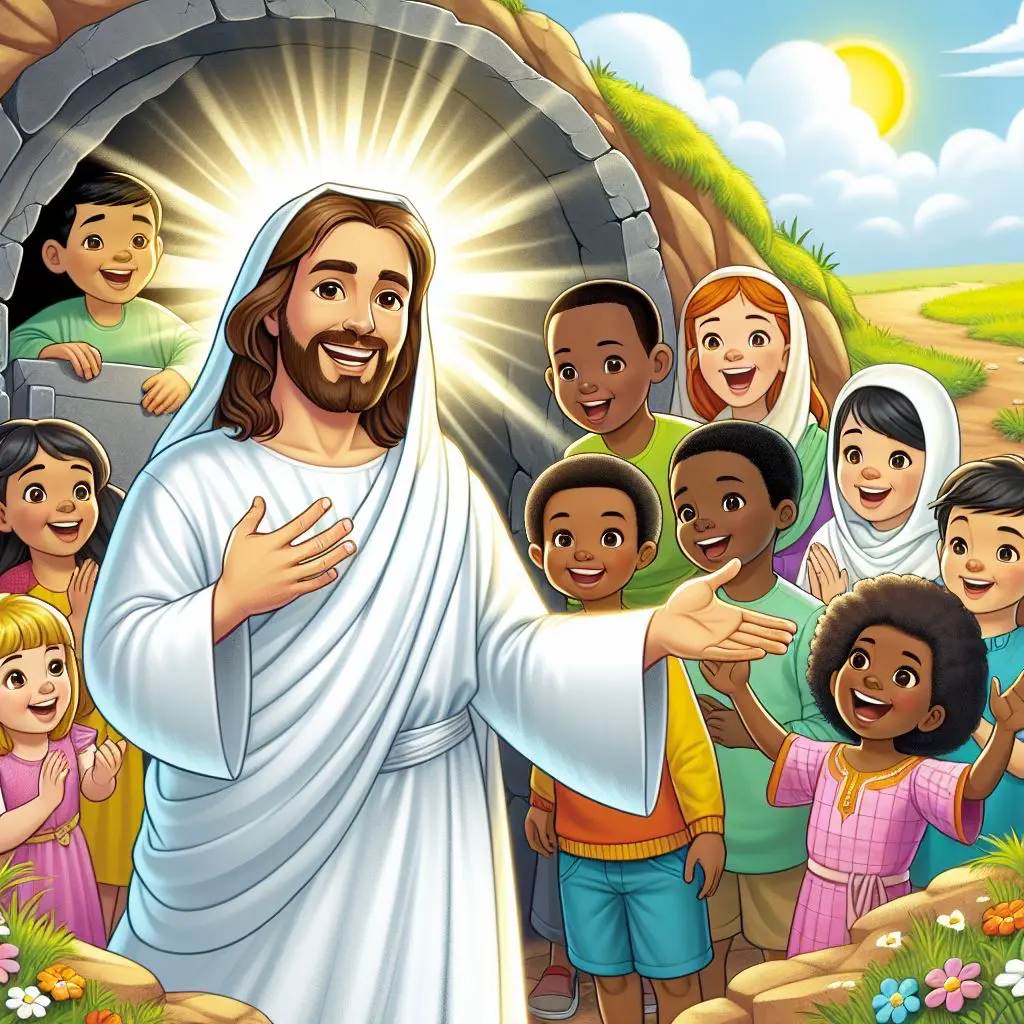
User said:
Less theatrical.
Copilot said:
Copilot
Final Creation
📚 A Children’s Tale Inspired by a Beloved Christian Story
Cover Image: Jesus's Easter Story
Chapter 1 — Jesus Enters Jerusalem
One sunny day, Jesus rode into Jerusalem on a donkey. The people were so happy to see him! They waved palm branches and shouted “Hosanna!” which means “Save us now” in Hebrew.
This was the beginning of a very important week in Jesus’s life.
Chapter 1 Image.
Chapter 2 — The Last Supper
Jesus had a special meal with his twelve disciples, called the Last Supper. He shared bread and wine with them and explained that these were symbols of his body and blood.
Chapter 2 Image.
Jesus told his disciples to remember him whenever they shared this meal. He also washed their feet to show them that even a leader should serve others with love and kindness.
Chapter 3 — The Betrayal and Arrest
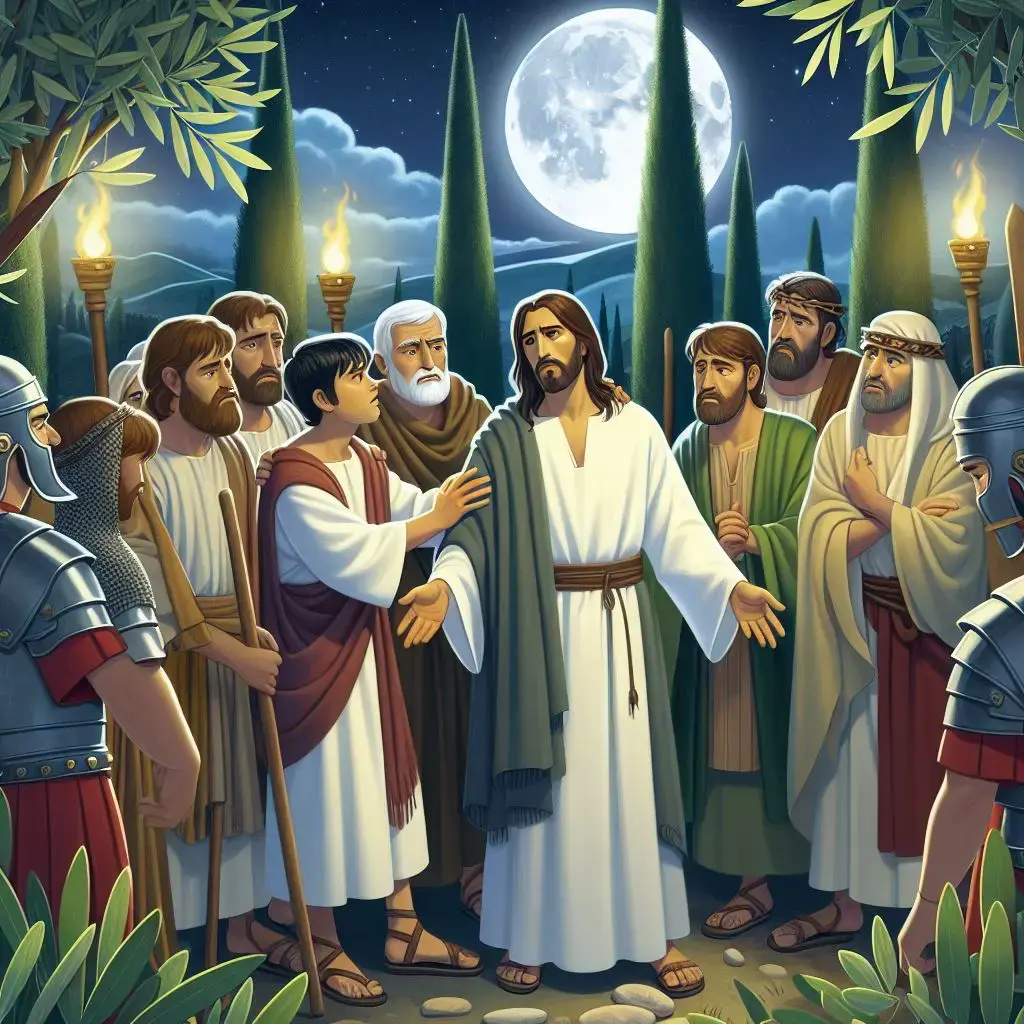
After the Last Supper, Jesus went to a garden called Gethsemane to pray. He was very sad because he knew what was going to happen. Jesus prayed to God, asking if there was any way to avoid the suffering he was about to face, but he accepted God's plan.
Chapter 3 Image.
Meanwhile, Judas, one of Jesus's disciples, had made a deal with the religious leaders to betray Jesus for thirty pieces of silver. The leaders thought Jesus was lying about being the Son of God, which they considered very disrespectful. Judas led some soldiers to the garden and showed them who Jesus was by greeting him with a kiss on the cheek.
Chapter 3.1 Image
This was a common way to say hello back then. The soldiers arrested Jesus, and his disciples ran away, scared and confused.
Chapter 4 — The Trial and Crucifixion
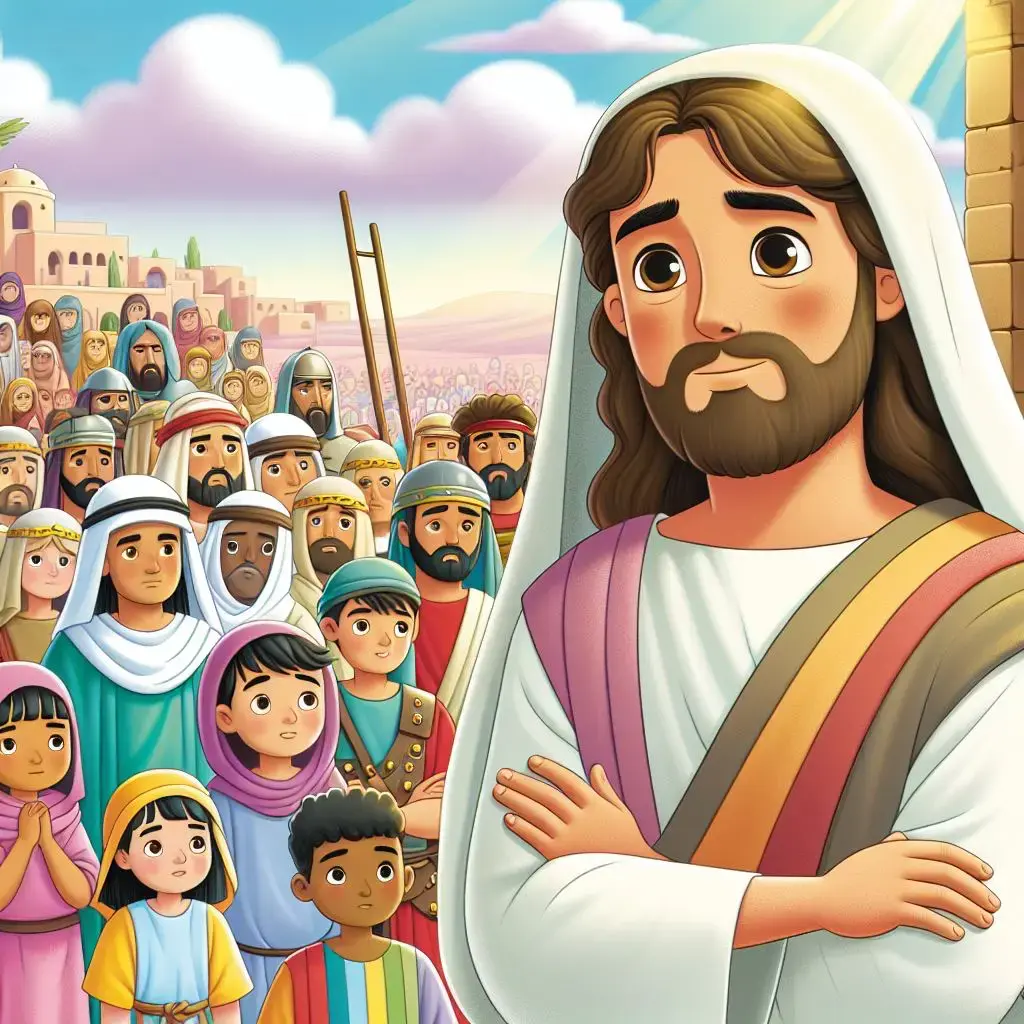
Jesus was taken to Pontius Pilate, the Roman governor. Pilate didn't think Jesus had done anything wrong, but the crowd, influenced by the religious leaders, demanded that Jesus be crucified. Jesus was sentenced to death and had to carry his cross to a place called Golgotha. He was crucified between two criminals. Even while suffering, Jesus forgave the people who were hurting him.
Chapter 4 Image.
Jesus said several important things before he died:
- "Father, forgive them, for they do not know what they are doing." (Luke 23:34) - Jesus asked God to forgive the people who were crucifying him.
- "Truly, I say to you, today you will be with me in Paradise." (Luke 23:43) - Jesus told one of the criminals beside him that he would be with Jesus in heaven.
- "Woman, behold, your son!" Then he said to the disciple, "Behold, your mother!" (John 19:26-27) - Jesus told his mother, Mary, and the disciple John to take care of each other.
- "My God, my God, why have you forsaken me?" (Matthew 27:46, Mark 15:34) - Jesus cried out to God, feeling very alone.
- "I thirst." (John 19:28) - Jesus said this to show he was suffering.
- "It is finished." (John 19:30) - Jesus declared that his mission was complete.
- "Father, into your hands I commit my spirit!" (Luke 23:46) - Jesus entrusted his spirit to God before he died.
After saying these things, Jesus then died.
Chapter 5 — The Resurrection
Early on Easter Sunday, Mary Magdalene and some other women went to Jesus's tomb to take care of his body. But when they got there, they found the stone rolled away and the tomb empty. An angel told them that Jesus had risen from the dead, meaning he had come back to life. Mary Magdalene ran to tell the disciples, who didn't believe her at first but later saw Jesus themselves.
Chapter 5 Image
For the next 40 days, Jesus stayed with his disciples, teaching and preparing them for when he would go back to heaven. This time was very special and powerful for the disciples.
Chapter 6 — The Meaning of Easter
Easter is a time of renewal and joy. God sacrificed his only son, Jesus, so that we could be forgiven for our sins and have eternal life in heaven. This amazing sacrifice shows how much God loves us. We should always be thankful for this incredible gift.
People celebrate Easter in many ways around the world. They decorate and exchange Easter eggs, which symbolize new life. Churches hold special services with songs, prayers, and joyful gatherings. Families come together to share meals and enjoy each other's company.
Easter reminds us of Jesus's love and the promise of eternal life. It's a time to remember the incredible love and sacrifice of Jesus and to celebrate the new life and hope that his resurrection brings to the world.
✝️ Reflection Essay — “Jesus’s Easter Story: From Darkness to Light”
1. Process Analysis
The creative output from this assignment was a children's book that explained the story of Easter. It included the written story, a cover image, and 5 images for each book chapter. My creative aim for this project was to create an engaging story that describes the meaning of Easter for children aged roughly 7-12. I collaborated with Copilot to refine the storyline content so that it incorporated most of the details that are important to retelling Easter. I also worked with AI to aim for child-friendly language, as well as appropriate visuals that were engaging and simple. My initial expectation for this project was that I wouldn't have to be significantly involved in the creation process, and AI would do most of the work. This, however, was not the case. My overall interaction with AI was around 40 pages long, as I had to frequently correct and revise certain aspects of the written story and the images. Some of the key decisions I made were simplifying theological ideas, refining the narrative and ensuring age-appropriate visuals. Some of the challenges that I was confronted with were repeated misspelling of the title in images, image adjustment errors, and missing content. However, despite these challenges, I was able to successfully adjust my prompts to produce an engaging, child-friendly retelling of Easter.
2. Technical Understanding
During my initial interaction with Copilot, I was impressed that the storyline created was fairly accurate to the Bible’s accounts of Jesus’s resurrection. I only had to add minimal prompts to strengthen the accuracy. For example, I felt that the story lacked an important detail about who found the tomb empty three days after Jesus’s crucifixion. To fix this, all I had to ask was “Can you add who found Jesus’s tomb empty?" Copilot then added the accurate person to the story, Mary Magdalene. However, much of the language that was used to describe this story did not follow the same plain language most children’s books do. To counter this, I prompted it to simplify the language used which worked well at first, but I eventually just ended up asking it to simplify specific words or phrases as this worked more effectively. I also had to ask it to explain things that children wouldn’t be able to understand to enhance the clarity of the story.
Furthermore, some of the images I asked it to create were fairly accurate to what I wanted. For example, I was pleased with the cover image and chapters 1 and 2’s images as they were close to what I asked for. However, other images had to be revised repeatedly as the art style changed and/or they were not being generated the way I asked. Some of the images also weren’t very accurate to the time period of the story. For instance, one of the images shows a light fixture that uses electricity. This is not an accurate portrayal of the period, so I had to ask it to revise this. In the future, Copilot and other generative AI might evolve to fix these errors by becoming better at remembering details more consistently so that users will not have to repeat corrections. It may also improve at recognizing time periods more accurately to correct details, as well as adapt its language automatically as it will be able to distinguish its audience. I also think these models will become better at sticking to certain art styles.
3. Ethical Implications
There are many ethical considerations that arose during this project. One thing I recognized was the way it highlighted how AI can hold a place in our education. While I think AI can certainly help us simplify and explain religious concepts, it's important to understand that it can’t replace human interpretation of Bible stories. This is because it is deeply rooted in personal experiences, traditions and faith which are human-based characteristics. I also think that it is equally important to understand how we can become complacent when we rely on AI creative works. If we fully embrace AI-generated stories and images about Christianity and other religions without oversights from humans as they evaluate AI processes, we open up the potential for misinformation, oversimplification of complex religious ideas, and the loss of culture. In the case of AI-generated children’s stories, the greater use of such AI created stories poses the threat of undermining the need for human narratives, raising ethical concerns about fair compensation and artistic value for human illustrators and writers (Rai et al., 2025). However, there is a potential that this may not be an accurate prediction. I think it’s also important to note that there is a potential that we will still value human artists and authors, even with AI creative works present as ‘we don’t think any less of birds when using planes.’
Another ethical consideration that has societal implications is the way AI can subtly shape the way religious stories are told and perceived. This potential for AI to control the way religious concepts are told can lessen human autonomy, as we lose control over religious narratives. Additionally, when AI is not carefully monitored, it may result in a favouring of some theological perspectives and beliefs over others. For these reasons, I believe that when AI systems are tasked with working with religious concepts they must be accompanied by human oversight (Cavalcante Siebert et al., 2023). This is due to the fact that AI tools can become pointless in religious contexts where genuine understanding, moral reasoning, and emotional depth are needed. This ‘meaningful human control’ will help to ensure the accuracy and ethical responsibility of AI processes and outputs (Cavalcante Siebert et al., 2023). I also think that human artists are more capable of capturing cultural and historical nuances when creating religious images, making them better suited than AI-generated images for children's books. Overall, this project demonstrates that AI models need to be adjusted so that they respect cultural and religious ideas, improve historical and contextual accuracy, while also raising a cause for concern on how we balance these AI tools with traditionally human-only created products.
Reference List
Cavalcante Siebert, L., Lupetti, M.L., Aizenberg, E. et al. Meaningful human control: actionable properties for AI system development. AI Ethics 3, 241–255 (2023). https://doi.org/10.1007/s43681-022-00167-3
Copilot. https://copilot.microsoft.com/
Rai, P., Gupta, K., Gabralla, L.A. et al. A royalty framework for copyright protection and accountability in AI-generated art. Discov Computing 28, 252 (2025). https://doi.org/10.1007/s10791-025-09766-0
Read More
Corpuz, J. C. G. (2025). Faith and Artificial Intelligence (AI) in Catholic Education: A Theological Virtue Ethics Perspective. Religions, 16(8), 1083. https://doi.org/10.3390/rel16081083
Papakostas, C. (2025). Artificial Intelligence in Religious Education: Ethical, Pedagogical, and Theological Perspectives. Religions, 16(5), 563. https://doi.org/10.3390/rel16050563
Tsuria, R., & Tsuria, Y. (2024). Artificial Intelligence’s Understanding of Religion: Investigating the Moralistic Approaches Presented by Generative Artificial Intelligence Tools. Religions, 15(3), 375. https://doi.org/10.3390/rel15030375