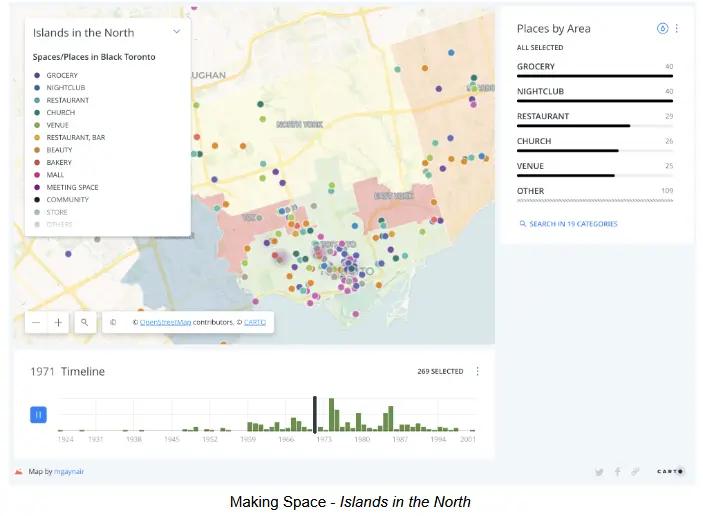
 Figure 1. Making Space – Islands in the North.
Mapping Belonging: An Intersectional Critique of Islands in the North
Toronto is often celebrated for its diversity, but who gets remembered in its official histories and who gets left out? Islands in the North, a digital exhibit created by Dr. Marlene Gaynair, reimagines the city through the experiences of Black Caribbean immigrants. This interactive project overlays archives, oral histories, music, advertisements, and photographs onto a map of Toronto, bringing to life the people and places that helped shape the city’s Black diasporic culture.
As someone who grew up in Toronto, I felt an immediate connection to the project. I recognized neighbourhoods like Eglinton West, Bathurst and Bloor, and Rexdale, yet I also discovered stories I had never encountered, such as the early community-building work of the Jamaican Canadian Association. To critically engage with the exhibit, I turn to Kimberlé Crenshaw’s concept of intersectionality, a framework that reveals how overlapping systems of power, race, gender, class, and migration shape lived experience. Crenshaw reminds us that without the right frame, some people remain invisible. Islands in the North builds that missing frame. It gives us a multidimensional view of Toronto that resists the flattening of Black Caribbean life into a single narrative.
Re-Mapping Black Toronto
Gaynair describes her project as a “(re)creation of space and place in the archive,” an effort to map what she calls “Black Toronto.” Using GIS tools, she visualizes cultural landmarks, community organizations, and gathering places, both past and present. The interface is clean yet extensive: users can explore the Making Space interactive map, browse the OMEKA-powered database, or attempt to load the now-inactive visual timeline, Making Place.
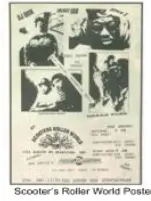 Figure 2. Scooter’s Roller World Poster.
The map’s entries, ranging from churches to bakeries to nightclubs, offer a mix of metadata and digitized artifacts. Some entries include posters or archival photographs. For example, Scooter’s Roller World in Rexdale appears alongside a flyer for a 1992 “gangster rap extravaganza,” while the Horseshoe Tavern is identified as an important music venue during the 1990s.
What stands out is how the project mobilizes Black cultural geography. This process of layering space, memory, and lived experience reflects a form of creative reconstruction, showing how digital tools can reassemble histories that were scattered, minimized, or institutionally overlooked.
Intersectionality in Action
Crenshaw’s theory emerged from legal activism, revealing how people who occupy multiple marginalized identities often fall through systemic gaps. “Without frames that allow us to see how social problems impact all the members of a targeted group,” she writes, “many will fall through the cracks of our movements.”
Islands in the North builds such a frame. By foregrounding the spaces Black Caribbean immigrants created and inhabited, the project exposes how migration, racialization, gender, and class shaped access to housing, social belonging, and public visibility.
Neighbourhoods like Eglinton West, known today for its Caribbean food and businesses, take on richer meaning when understood through this lens. Areas like Bathurst and Bloor, which may appear culturally disconnected from Black history today, are revealed to have played crucial roles in community life decades earlier. The exhibit not only recovers these stories but also invites users to reconsider Toronto’s racial history through an intersectional perspective.
Design, Data, and Digital Activism
The exhibit exemplifies digital data activism: it uses mapping not to extract or simplify Black experience but to make it more legible and expansive. Built from municipal open data, archives, news clippings, and oral histories, the platform highlights the cultural, emotional, and political significance of Black spaces.
Some elements are limited in scope. Certain entries, such as “City Hall,” lack context about their importance to Black Toronto, and more cross-linking between the map and the database would improve navigation. The Making Place timeline, which failed to load during this review, could have offered a dynamic view of how community spaces changed over time.
Still, the project excels at encouraging exploration. A single dot led me to the Jamaican Canadian Association, prompting further research into its connection to Jamaica’s independence movement and its influence in Toronto. This kind of creative digital discovery is one of the project’s quiet strengths.
Thinking of digital mapping as a creative practice helps clarify its impact: by reconstructing fragmented, overlooked, or partially erased histories into a shared visual narrative, the project performs an imaginative and restorative act that both remembers and re-envisions Black Toronto in digital and urban space.
Framing the City Differently
Crenshaw ends her TED Talk by urging us to move “from mourning and grief to action and transformation.” Islands in the North embodies that call. It remaps Toronto to centre the lives of those too often pushed to the margins and challenges myths of a neutral or post-racial Canada.
Beyond reframing Toronto’s geography, Islands in the North also speaks directly to the values of CTRL+ALT+DH and the broader digital humanities community. The project demonstrates how digital creativity can function as both a research method and a form of cultural care, using mapping, archival recovery, and interactive design to make erased histories newly visible. Its creative reassembly of data into an engaging digital form shows how technology can be used not just to represent the past, but to imagine more inclusive futures. In this way, the exhibit becomes a model for how digital tools can support justice-oriented storytelling, a core commitment of digital humanities scholarship and a perfect fit for conversations about how we create, value, and share art in digital spaces.
References
Crenshaw, K. (2016, October). The urgency of intersectionality [Video]. TED Talks.
https://www.ted.com/talks/kimberle_crenshaw_the_urgency_of_intersectionality?language=en
Gaynair, M. (n.d.). Database - Islands in the North. https://items.islandsinthenorth.com/
Gaynair, M. (n.d.). Islands in the North. https://islandsinthenorth.com/index.html